Architecture

Friday, 19 December 2025
29 facts about Palace of Versailles
Former residence of the kings of France
The Palace of Versailles is one of the largest palace complexes in Europe. It is part of the historical and cultural heritage of France, as a symbol o ...

Did you know?

Big Ben
The clock was built by Edmund Beckett Denison and the EJ Dent&Co company in 1854.
The clock face was designed by Augustus Pugin and set in a steel frame with a diameter of 7 meters, ...
La Sagrada Familia
Gaudi did not complete the temple, as he died on June 10, 1926, from injuries sustained three days earlier when a streetcar hit him.
After his death, he was buried in the basilica's crypt, following his wishes.
Great Pyramid of Giza
The Queen's Chamber is located centrally in the horizontal axis of the pyramid and located below the Great Gallery.
Its dimensions are 5.23 m in the east-west axis and 5.75 in the north-south axis. It is covered with ...
Empire State Building
The Empire State Building's electrical wiring length is 692 km, and the water pipes are 112 km.
Spanish Steps
In former times two roads led down from the church along the hillside, steep and muddy, inaccessible to carriages.
The difference in elevation clearly separated the church from the city below. There were several pro ...
Space Needle
The Legacy Light of SkyBeam, powered by 85 million candela lamps, is an integral part of the Space Needle since New Year’s Eve of 1999.
Powered in 1999 to greet the new Millennium, it honors local and national holidays and special occasions ever since.It was lit for 11 consecutive days after the 9/11 attack in memory of the fallen.
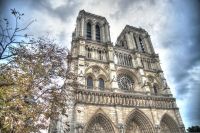
Notre-Dame
Notre-Dame is known for its three rosettes.
They are located on the western, northern, and southern walls. The first one was created in 1225 and ...
Brooklyn Bridge
The Brooklyn Bridge is the world's first steel suspension bridge.
Pompeii
The city was covered with a nearly 6 m (20 ft) layer of volcanic ash.
On the city fell glowing stones (lapilli), causing fires. The clouds of poisonous gases killed all who remained in Pompeii. The so-called burning cloud had a temperature of up to 600 °C (1112 °F).
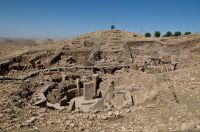
Göbekli Tepe
Neolithic hunter-gatherer people appeared in Gobekli Tepe about 11,500 years ago.
These people nomadized in small tribal groups that subsisted by gathering plants and hunting. To bui ...