Plants

Friday, 3 April 2026
21 facts about olives
"Where the olive refuses to grow, there the Mediterranean world ends"
It is not known exactly when and where the first olive tree, characteristic of the Mediterranean region, grew. Paleobotanists claim that wild olives g ...

Did you know?

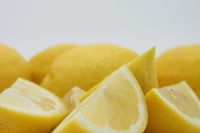
Lemon
Despite a very sour taste, lemon is an alkaline fruit and allows you to maintain the acid-base balance of the body.
Lemon juice is rich in alkaline minerals that remain in the blood during metabolism raising its pH, which in turn alkalizes the entire body.
Coconut tree
A full-sized coconut fruit weighs about 1.4 kilograms.
The fruit can reach different weights, with up to 0,5 kilograms being encountered - the largest fruits reach up to 2,5 kilograms.
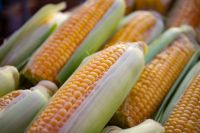
Corn
Corn cultivation was introduced to South America from Mexico in two great waves.
More than 6,000 years ago, the first spread in the Andes (evidence of cultivation in Peru was found ...
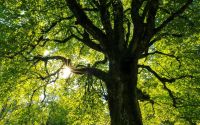
Trees
In the soil, roots encounter shreds of fungi with which they form mycorrhiza - a mutually beneficial symbiotic relationship.
Some fungi are specific to only one tree species, while others associate with multiple species. The ...
Sycamore maple tree
It is most frequently found as an admixture in moist, shady mountain foliage and mixed woods, on the banks of mountain streams, in the trees in the midst of fields.
In the mountains, it sometimes forms compact stands.
Chestnuts
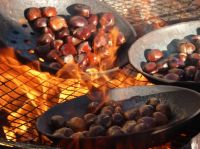
Chestnuts are one of the few "nuts" that contain vitamin C.
100 g of chestnuts contain 48% of the daily requirement for this vitamin. In addition to vitamin C, ...
Stinging nettle
Stinging nettle reduces excess water in the body.
It causes flushing of the kidneys and lower urinary tract. It is used for kidney stones and bladder ...
Parsley
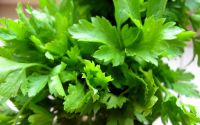
Parsley is also rich in provitamin A, vitamin K, iron, calcium, and potassium.
Pumpkin
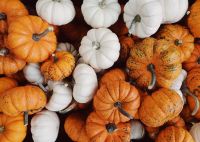
There is only 30 kcal in 100 grams of pumpkin.
It has a relatively high glycemic index of 75, which is why it is not recommended for diabetics.
Jerusalem artichoke
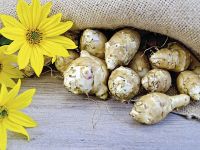
Americans refer to the wild sunflower as Jerusalem artichoke or Canadian truffle.
This is probably related to the account of Samuel de Champlain, a French explorer who, while traveli ...